EACH LAYER MATTERS. TOGETHER, THEY HELP SAVE LIVES.
Backyard pools are where memories are made, but also where tragedy can happen in seconds. Drowning is silent, fast, and preventable. That’s why experts don’t recommend just one safety method; they recommend layers.
This guide walks you through the five most trusted pool safety layers every parent should know. From active supervision to secure fencing and child swim skills, each layer adds time, awareness, and protection when you need it most.
According to the Centers for Disease Control and Prevention (CDC), drowning is a leading cause of death for children. Layered protection helps reduce the risk.
Layer 1: Active Supervision
No substitute, no skipping. Someone should always be watching.
Most drownings happen when no one is paying attention, even for just a moment. Active supervision means a designated adult is fully focused on the pool, especially when children are present.
Tips for better supervision:
- Assign an Adult Watcher with a card or whistle
- No phones, no multitasking
- Rotate every 15–30 minutes during gatherings
- Stay within arm’s reach of non-swimmers
Layer 2: Pool Fencing
The only layer that protects even when you’re not looking.
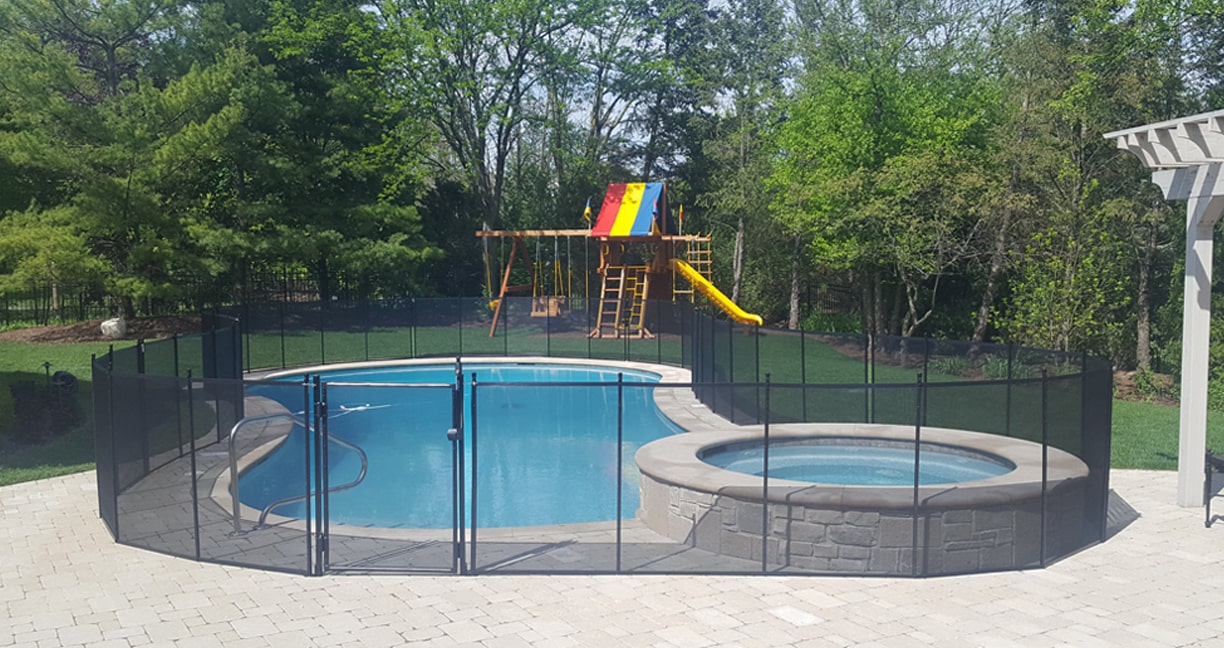
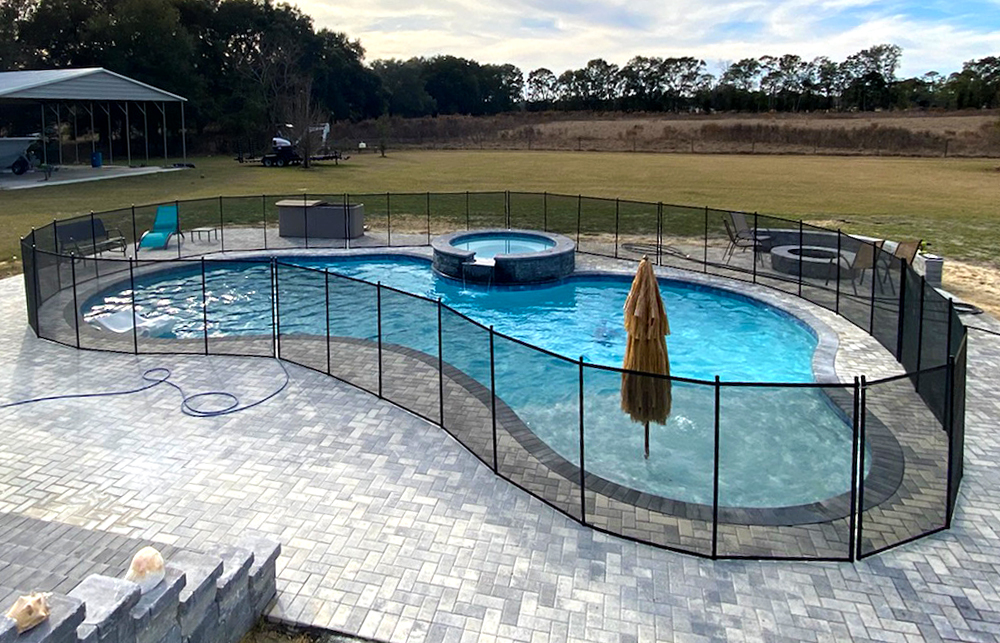
A pool fence is a passive, 24/7 barrier, working even when you’re inside, asleep, or answering the door. The CDC and American Academy of Pediatrics (AAP) both recommend four-sided isolation fencing to separate the pool entirely from the home and yard.
What to look for in a child safety fence:
- At least 4 feet high
- Self-latching, self-closing gate
- No footholds or climbable features
- Tight mesh or vertical slats that prevent passage
- Meets ASTM F2286-16 safety standards
Layer 3: Alarms
Add an alert system to doors, gates, or the pool itself.
Alarms don’t stop entry, but they notify you when another layer fails. This gives parents precious seconds to respond.
Alarm types to consider:
- Door/Window Alarms: Alerts when a child opens access to the pool
- Gate Alarms: Triggers if fence gate opens
- Surface Wave Alarms: Detects movement on pool surface
- Wearable Devices: Some wristbands trigger alarms when submerged
Layer 4: Swim Lessons and ISR
Prepared swimmers are more likely to survive an accident, but swimming is never a substitute for supervision.
Teaching children how to respond in water is a valuable safety layer. Many experts recommend ISR (Infant Swimming Resource) for babies as young as 6 months, and traditional swim lessons for older children.
What to look for in a program:
- Teaches survival techniques (float, breathe, reach wall)
- Offers repetition and gradual comfort in water
- Encourages respect for water, not overconfidence
- Age-appropriate, trauma-informed methods
The AAP notes that swim lessons can reduce drowning risk for children aged 1–4 but should never replace other layers.
Layer 5: Drain Safety
A hidden hazard that every parent needs to know about.
While most people think about fences and gates, drains are one of the most overlooked dangers in a swimming pool. Strong suction from an unprotected drain can trap a child underwater in seconds, especially if the drain cover is missing, broken, or outdated.
This isn’t just a risk in public pools. It can happen in backyard pools and spas too.
What you can do:
- Make sure your pool has VGB-compliant drain covers, as required by law
- Never let children play or sit near drains, even with covers in place
- Hire a pool professional to inspect your drain system regularly
- Educate older children about suction hazards and safe pool behavior
The U.S. Consumer Product Safety Commission created the Virginia Graeme Baker Pool & Spa Safety Act to prevent these entrapments after multiple fatal accidents. Drain safety is a crucial part of any drowning prevention strategy.
Why Layers Matter — and Where Protect-A-Child Fits In
One layer can fail. Multiple layers can save a life.
A door left ajar. A gate that doesn’t latch. A moment of distraction. Accidents happen fast. That’s why safety experts like the CDC and CPSC recommend a layered approach to prevent child drownings.
Every layer matters, but some offer protection even when others fall short.
That’s where Protect-A-Child’s pool fence makes a difference. It’s one of the few safety measures that works 24/7, even when no one is watching.
What makes our fences different:
- Climb-resistant and ASTM-compliant
- Patented I-beam fiberglass posts and secure latches
- A clean, low-profile look that blends into your yard
- Professional installation from trusted local experts
For over 40 years, thousands of families have trusted us to protect what matters most—and we’d be honored to help protect yours.