EARLIER THAN YOU THINK, SO YOU’RE IN THE RIGHT PLACE.
New baby on the way? Already baby-proofing cabinets and outlet covers? One thing many parents don’t think about early enough is pool safety—especially when water isn’t inside the home.
But here’s the truth: drowning is the leading cause of accidental death for children ages 1–4 (CDC), and most incidents happen in backyard pools—often during a moment of distraction.
This guide helps expecting and new parents understand when and how to start building a safe environment around water, so your baby can grow up safe, confident, and protected.
What You’ll Learn in This Article:
Start Pool Safety Before They Start Crawling
You don’t need to wait until your child can walk—or even crawl—to take drowning seriously.
Why start early:
- Babies grow fast. The crawling stage sneaks up quickly.
- You may be recovering from birth or adjusting to new routines—early planning reduces pressure later.
- Supervision is essential, but no parent is perfect 100% of the time.
Even if your baby can’t move on their own, visitors, siblings, or pets could unintentionally create access to the pool. Early layers of protection give you peace of mind before the milestones hit.
According to the CDC, pool drownings can happen in seconds—and are most common when caregivers don’t expect the child to be near water.
When to Install a Pool Fence
The best time to install a fence? Before you think you need it.
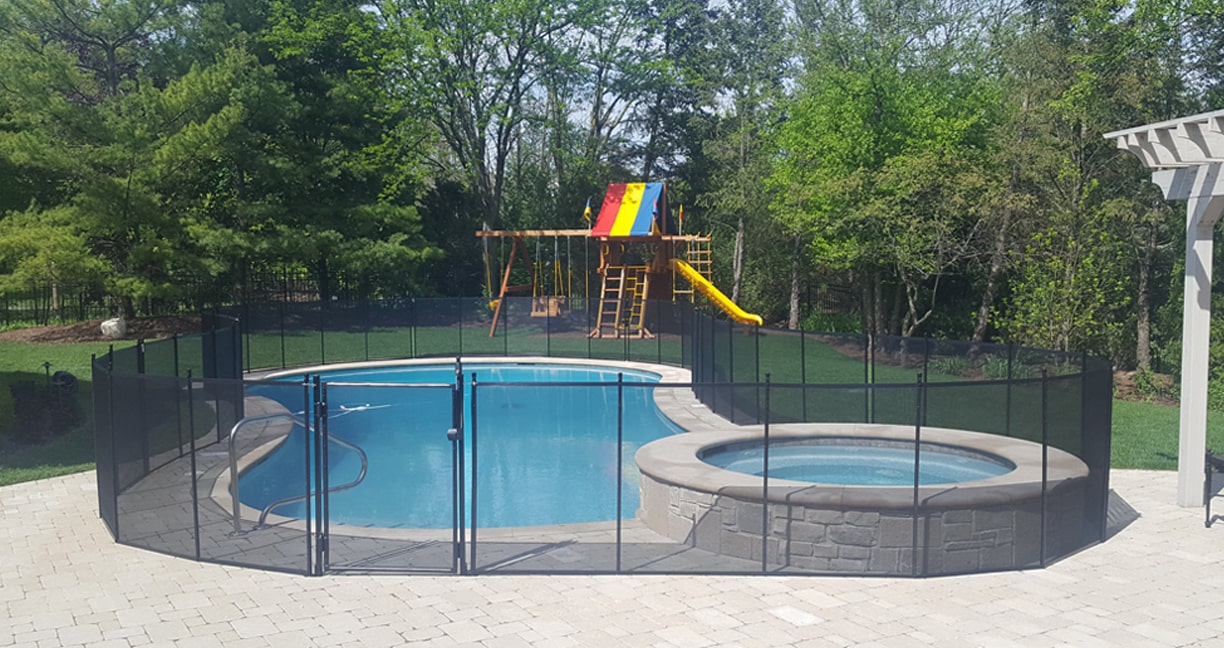
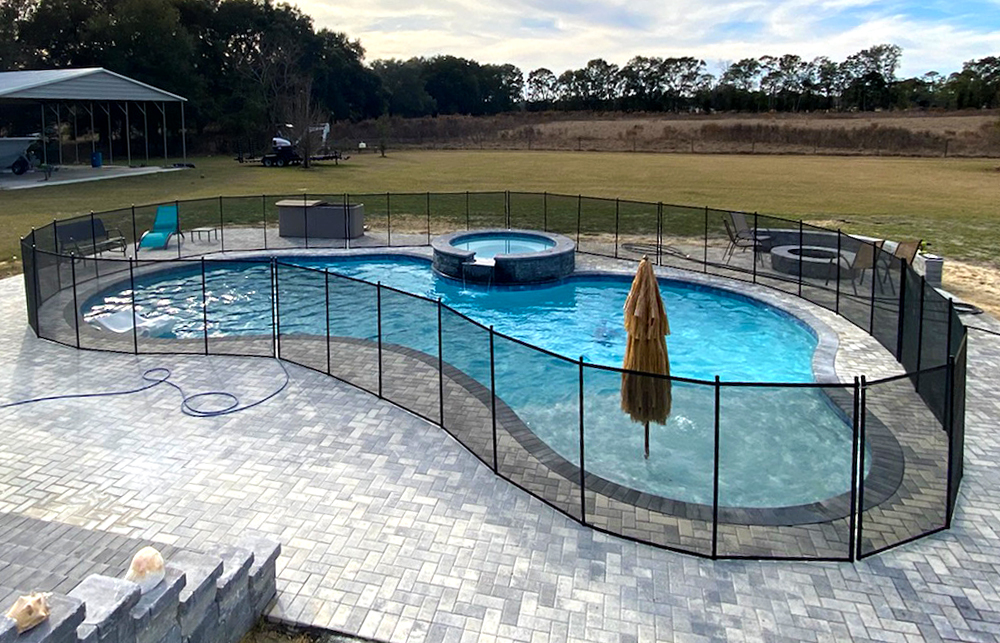
Removable mesh fences are a great early solution because they:
- Can be installed before walking or crawling begins
- Stay in place for years—or be removed when no longer needed
- Comply with ASTM pool barrier standards
- Are safe for both full-time residents and visiting grandkids
Even if you have a pool cover or door alarms, a physical fence is the only layer that works 24/7, whether you’re watching or not.
The AAP recommends installing a four-sided isolation fence around pools for all homes with children under 5.
Water Safety Starts Inside the Home Too
Even without a backyard pool, babies are curious—and water is everywhere. Bathrooms, dog bowls, and even mop buckets pose drowning risks for infants.
Early home water safety tips:
- Never leave water in tubs, sinks, or baby baths unattended
- Install toilet locks and keep lids closed
- Empty standing water in buckets, coolers, and inflatable pools
- Keep bathroom doors closed
- Supervise around pet bowls
Drowning can happen in as little as one inch of water. Getting into the habit of dry storage and alert supervision helps you build lifelong water safety awareness from day one.
When Can My Baby Start Swim Lessons or ISR?
You don’t need to rush into formal swim lessons in infancy, but awareness matters early.
What to know about baby swim safety:
- ISR (Infant Swimming Resource) often starts between 6–12 months
- Programs focus on self-rescue, floating, and turning toward the wall
- Instructors who are sensitive to each baby’s comfort level
- Parent-infant swim classes may begin earlier and focus on comfort in water
- Lessons are a layer—not a replacement—for supervision and barriers
Where to look for classes:
Check with your local YMCA, swim schools, or community centers
Ask friends or parenting groups for trusted private instructors
Visit infantswim.com to find certified ISR providers near you
The AAP supports swim instruction as early as 1 year old if families are ready and programs are appropriate.
Final Thoughts: Start Sooner. Worry Less.
The earlier you think about water safety, the more prepared you’ll feel later. You don’t need to stress or overdo it—just start with the layers that work while your baby is still small.
Key early steps:
- Install a mesh pool fence (Why a mesh pool fence?)
- Stay aware of indoor water risks
- Learn about ISR options
- Make water safety a natural part of your parenting routine
At Protect-A-Child, we’ve helped thousands of new parents feel peace of mind around their pools—before the crawling begins.