FENCING IS THE FOUNDATION. ALARMS ARE JUST ONE LAYER.
Some parents feel confident having just a pool alarm or other layers of safety. Others think supervision alone is enough. But the truth is, the most trusted authorities on child drowning prevention — including the CDC, CPSC, and NDPA — agree on one thing: every pool should have a pool safety fence.
This article explains why fences remain the most effective safety barrier, how they complement other layers like alarms, and what the experts say about building a safer backyard for your family.
Alarms Are Helpful — But Only When Someone Hears Them
Pool alarms are a great safety layer, but they have a major limitation. They alert you after a child has already entered the water. That means the danger has already happened, and now you’re racing against time.
Even the best alarm system won’t help if:
- You don’t hear it because you’re inside with music or a vacuum running
- The battery is low or the system is disabled
- A child enters the water silently while no adult is nearby
According to the CDC, drowning can happen in seconds — and it’s often silent.
Alarms are valuable, but they should never be your only line of defense.
What the Experts Say About Pool Safety Barriers
The leading safety organizations have been clear about one thing: barriers save lives.
- The CDC recommends four-sided isolation fencing that completely separates the pool from the home and yard
- The CPSC’s Pool Safely campaign says barriers should be your primary protection, with alarms and covers acting as supporting layers
- The National Drowning Prevention Alliance (NDPA) describes fencing as “critical” and encourages families to use multiple layers of protection for the best results
You can learn more directly at PoolSafely.gov and NDPA.org
Why Pool Fences Matter — Even With Supervision
Most drowning cases happen when no one expects the child to be near the pool. It could be during a birthday party, while you’re answering the door, or while putting away groceries.
That’s why a pool safety fence is so important:
- It physically blocks access when you’re not looking
- It works 24/7, not just when an alarm is armed
- It gives time to react, before a child reaches the water
Unlike alarms or covers, a pool fence does not rely on batteries, Wi-Fi, or your hearing. It’s always there, doing its job quietly.
What Makes a Pool Safety Fence Effective
Not all fences meet safety standards. To truly protect children, a fence should include:
- Minimum height of 4 feet
- Self-closing, self-latching gates
- Non-climbable materials, such as mesh without horizontal rails
- No direct access from the home (especially in homes with sliding doors or garages nearby)
- Professional installation to eliminate gaps or weak points
- Compliance with ASTM F2286-16 standards
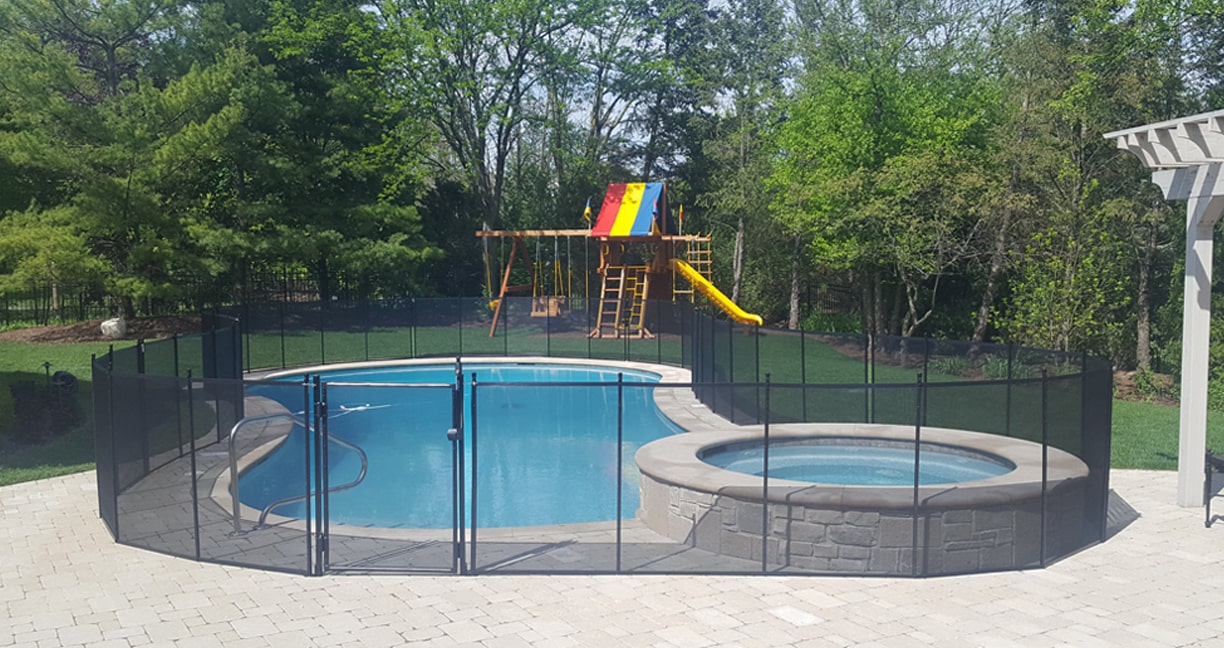
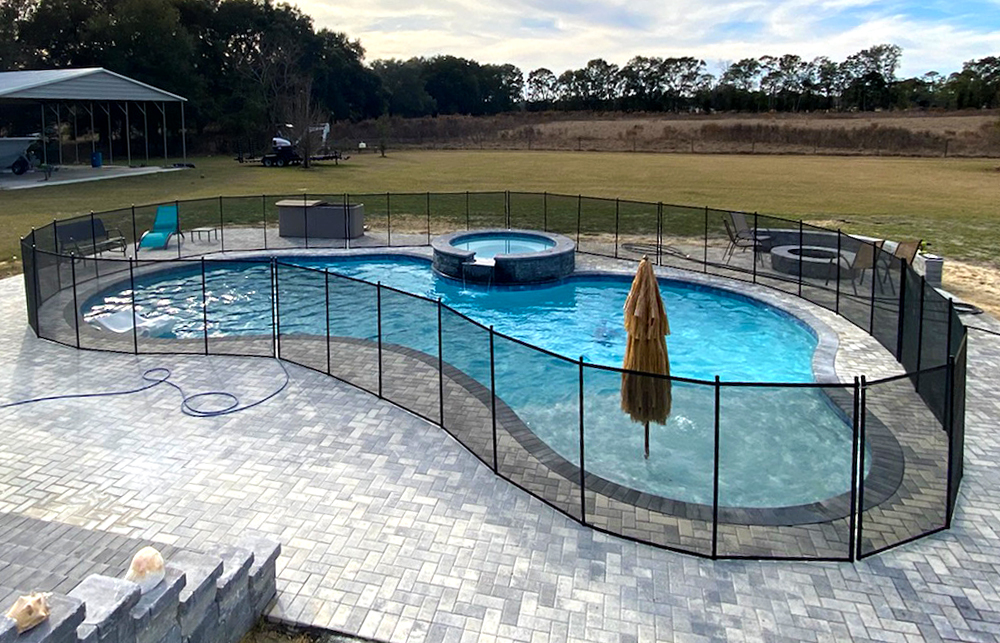
At Protect-A-Child, we build removable mesh fences designed to prevent children from climbing, pushing through, or accessing the pool area without an adult. Our patented fiberglass posts and secure latching system are trusted by families nationwide.
How Fences Work With Alarms and Other Safety Layers
Think of a pool fence as your foundation, and alarms as an extra layer. You don’t have to choose one or the other — you can use both to create a much safer environment.
Here’s how they work together:
- Fence keeps kids out of the pool area entirely
- Alarms alert you if a child opens a door or touches the water
- Supervision is your active layer when you’re outside with them
This approach is what the NDPA calls “layers of protection” — because no single method is enough.
Don’t Settle for Just One Line of Defense
You wouldn’t rely on a smoke alarm without a fire extinguisher. In the same way, a pool alarm alone is not enough to protect your child from drowning.
A pool fence gives you a physical, proven, always-on barrier that helps prevent tragedies before they happen. Combined with other layers — like alarms, supervision, and swim lessons — it becomes part of a safer system that protects the people you love.