Short answer: A properly designed and installed mesh pool fence is designed to make climbing difficult, but no pool fence should be considered completely “climb-proof.”
Young children are curious and can be surprisingly determined. That’s why an effective pool barrier should do more than simply separate the pool from the rest of the yard. Its design should minimize features a child could potentially use to climb over it.
The American Academy of Pediatrics (AAP) recommends pool barriers without footholds or handholds that could help a young child climb. The U.S. Consumer Product Safety Commission (CPSC) also provides specific guidance intended to reduce climbing opportunities in residential pool barriers.
Why Mesh Pool Fencing Can Be Difficult to Climb
Not every type of fence presents the same climbing challenge.
Some traditional fence designs include horizontal rails, crossbars, decorative elements or larger openings that may provide a child with a place to put a hand or foot. CPSC pool-barrier guidelines specifically address horizontal fence members and opening sizes to reduce opportunities for young children to climb.
A properly designed mesh pool fence works differently.
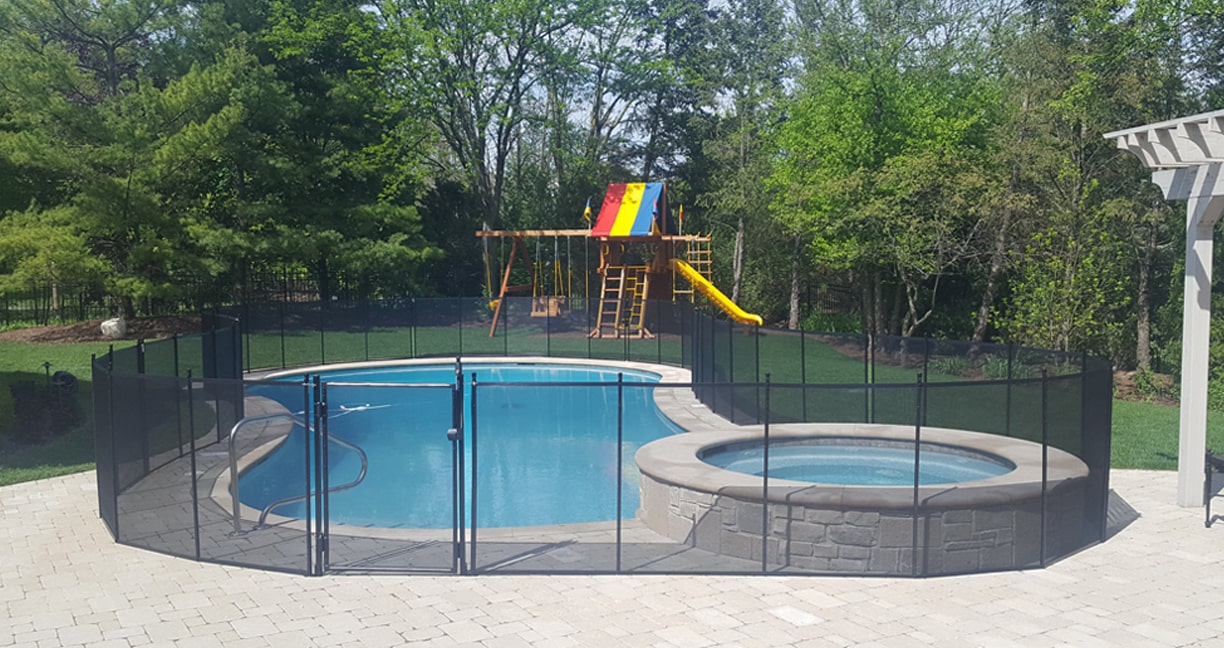
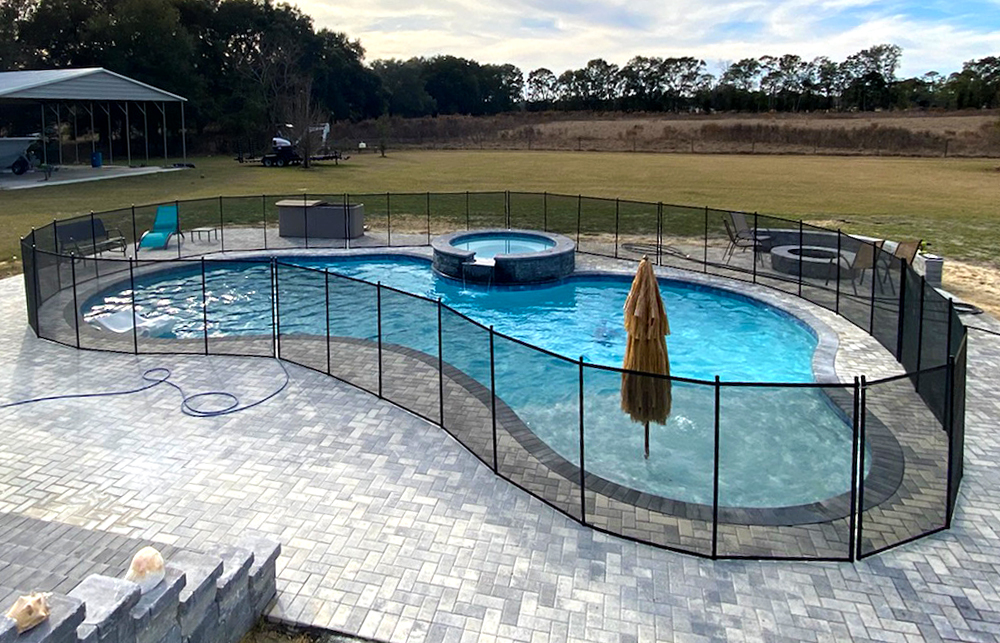
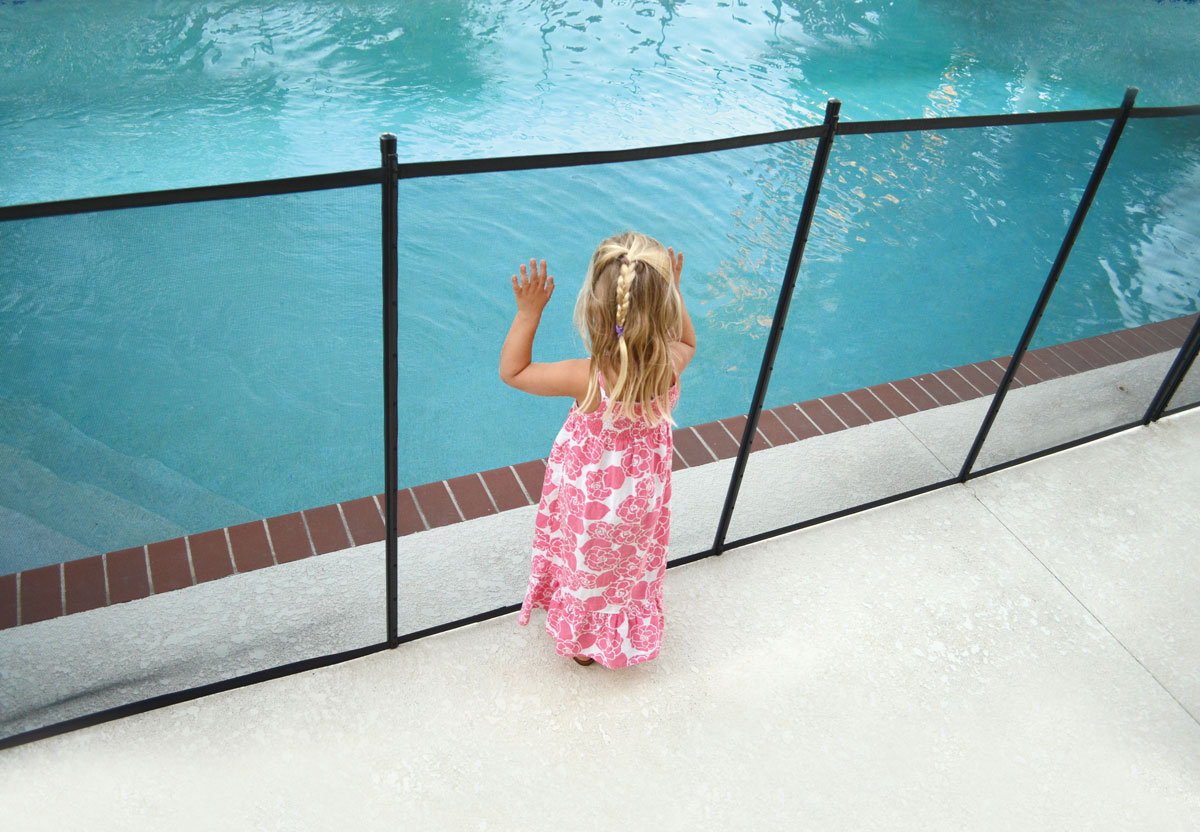
Tightly woven mesh creates a relatively smooth vertical barrier without horizontal rails running across the outside of the fence. The openings are also small enough that they don’t provide the obvious footholds found in designs such as chain-link fencing.
That doesn’t make mesh fencing impossible to climb. No responsible safety barrier should be treated as foolproof. But eliminating easy footholds and handholds is an important part of climb-resistant pool fence design.
This is one of several factors to consider when determining whether a removable pool fence is safe.
Keep Chairs and Other Climbing Aids Away From the Fence
Even a well-designed barrier can be undermined by what’s placed around it.
Patio chairs, tables, large toys, storage boxes, planters and other objects near the outside of a pool fence can potentially give a child additional height or leverage.
The AAP notes that children can use nearby objects to gain access to pools, so it’s important to consider the area around the barrier as well as the fence itself.
A few good habits include:
- Keep chairs and easily moved furniture away from the outside of the pool fence.
- Don’t leave large toys, storage containers or other climbable objects beside the barrier.
- Look at the area from a child’s perspective and identify anything that could become an unintended step.
- Keep the gate area clear so nothing interferes with closing and latching.
A pool fence is only one part of a larger safety strategy. Learn more about the 5 layers of pool safety every parent should know.
Why a Tight, Upright Mesh Fence Matters
The mesh itself is only one component of a removable pool fence. The posts supporting it matter, too.
Children may bump into, pull on or tug at a fence during everyday family life. Adults may lean against it, toys may hit it and weather can place additional stress on the system. Over time, the strength and resilience of the posts can affect how well the fence maintains its shape and tension.
Protect-A-Child uses solid composite I-beam posts designed to flex under pressure and return to their original shape rather than remaining permanently bent.
This is an important distinction from conventional aluminum posts. When an aluminum post is overloaded and permanently bends, the surrounding mesh can begin to lean or sag. Attempting to repeatedly straighten bent aluminum can also fatigue and weaken the material.
Protect-A-Child’s composite post design is engineered to withstand repeated flexing while helping the fence remain straight and taut.
That means post strength isn’t simply about surviving one extreme event. It’s about helping the entire fence maintain the tension, alignment and clean appearance it was designed to have through years of real-world use.
See how Protect-A-Child has reinvented the mesh pool fence with its I-beam post design, modular mesh panels and slimmer profile.
Professional Installation Makes a Difference
Even a high-quality pool fence can perform poorly if it isn’t installed correctly.
Removable mesh fencing depends on accurate post spacing, drilling angles, mesh tension, fence layout and gate installation. Improperly drilled holes or incorrect spacing can contribute to loose or drooping mesh rather than the tight, upright barrier the system was designed to provide.
Protect-A-Child dealers are trained to custom-fit each fence to the individual pool area, properly position the posts and maintain appropriate tension throughout the fence.
That matters for both safety and style.
A professionally installed fence should feel secure while maintaining straight posts, taut mesh and clean sightlines around the backyard. Proper layout can also allow the fence to follow curves and unique pool shapes rather than simply placing a generic rectangle around the water.
Learn more about how Protect-A-Child pool fencing is professionally installed.
Don’t Overlook the Gate
A climb-resistant fence is only effective when the entire barrier is secure.
The AAP and CPSC recommend pool barriers with self-closing, self-latching gates. The gate should close completely and latch without someone having to remember to secure it each time.
Protect-A-Child offers self-closing pool safety gates with spring-loaded hinges and key-lockable magnetic latches designed for convenient everyday access while maintaining the pool barrier.
Gate operation should also be checked regularly to make sure it continues to close and latch properly.
A Pool Fence Is One Layer of Safety
No pool fence should create a false sense of security.
Safety organizations recommend multiple layers of drowning prevention because no single product or precaution can prevent every incident. Active adult supervision remains essential whenever children are in or around water.
A pool fence adds something different: a physical barrier intended to help prevent a child from reaching the pool during an unexpected moment.
If children live in or regularly visit your home, read more about when a pool fence is recommended.
Bottom Line: Can a Child Climb a Mesh Pool Fence?
A properly designed mesh pool fence can make climbing much more difficult by creating a tall, relatively smooth barrier without the obvious horizontal rails, footholds and handholds found in some other fence designs.
But effective pool fencing is about more than mesh.
Climb-resistant design, strong posts, proper tension, a secure gate, thoughtful placement and professional installation all work together to create an effective barrier.
When comparing pool fences, look at the entire system and not just one component. Consider how the fence is constructed, how well it maintains its shape and tension, how the gate operates and who will be responsible for installing it around your pool.
For more than 40 years, Protect-A-Child has focused on removable mesh pool fencing that brings together safety, strength, professional installation and a clean, low-profile design for today’s backyards.
Explore Protect-A-Child pool fencing or request a free quote from your local Protect-A-Child professional.
FAQs
Is mesh pool fencing climb-proof?
No pool fence should be considered completely climb-proof. Mesh pool fencing is designed to make climbing difficult by minimizing features such as horizontal rails, footholds and handholds that a young child could potentially use for leverage.
Why shouldn't I put chairs near a pool fence?
A chair, table, large toy or similar object may give a child additional height or a place to climb. Keep climbable and easily moved objects away from the outside of the pool barrier.
Does it matter if a mesh pool fence is sagging?
Yes. A removable mesh pool fence is intended to remain properly tensioned and aligned. Loose, leaning or drooping sections should be inspected to determine whether the fence requires adjustment, repair or other maintenance.
What should I look for in a pool fence?
Look beyond the mesh itself. Consider the fence’s height, climb-resistant design, post strength, mesh tension, gate operation, installation quality and applicable local pool-barrier requirements.