Short answer: Before the kids ever play in the backyard, make sure the pool has a physical barrier around it, and treat any existing fence, gate or cover as unproven until you have checked it yourself. A barrier is a layer of protection, and it works alongside active adult supervision, not in place of it.
Moving into a home with a pool is exciting. It is also the one time you inherit a safety setup you did not choose. You do not know how old the fence is, whether the gate latches every time, or whether the previous owners had small children. Here is what to do first.
Start before closing, during the inspection
If you are still in the buying process, look at the pool area with child safety in mind, not just condition and equipment. Walk the full perimeter and note what keeps a child out of the water when no adult is watching.
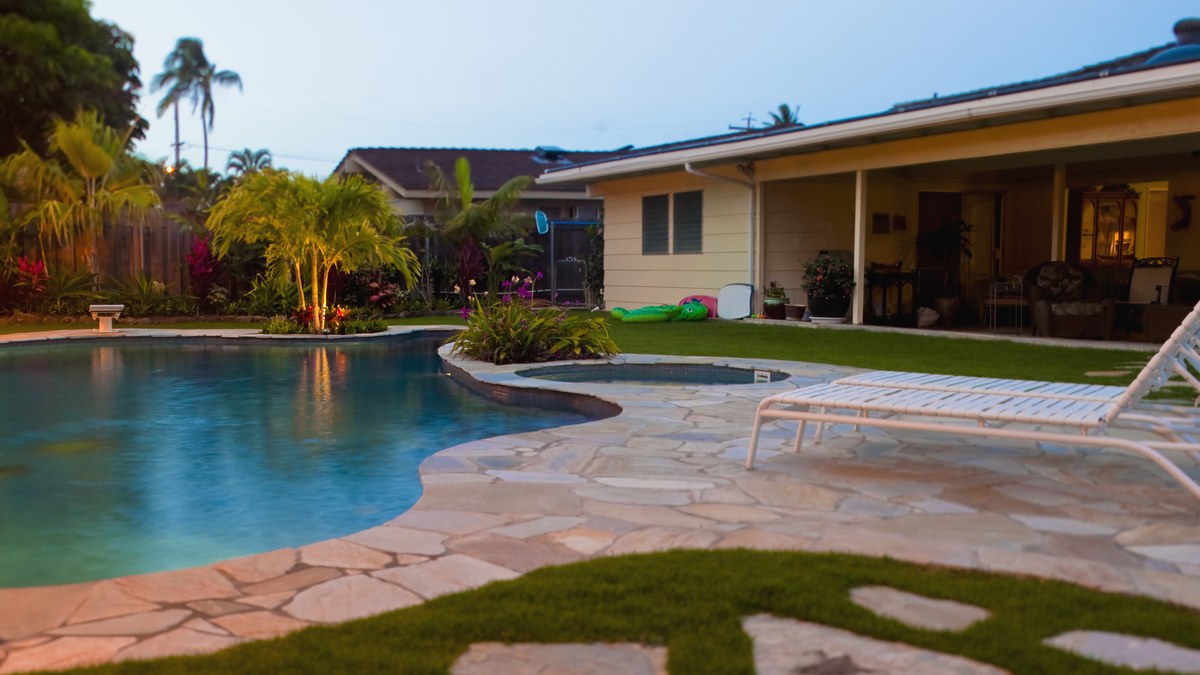
- Is there a fence or barrier fully around the pool, or does the back door of the house open straight to the water?
- Does the gate close and latch by itself?
- Are there gaps, loose sections, or places where a toddler could squeeze through or climb?
Pool and barrier requirements vary by city, county and state, and they can affect a sale or your insurance. Check your local requirements and ask your agent or inspector what applies to this property. Do not assume the current barrier meets them just because the pool has been there for years.
Treat the pool as unsecured until you have checked it
On move-in day, assume the pool is open access until you have personally tested every way in. Check these first:
- The fence or barrier. Look for damage, weak spots and sections that move too easily. Older fences may have been built for a different purpose, like privacy, and not for keeping children out.
- The gate. Open it, let go, and see whether it closes and latches on its own. Test it more than once. Never treat a latch as something you can stop checking, and make it a habit to confirm the gate is secure every time you pass through.
- Doors and windows. If the house itself forms part of the barrier, think about how a child could get from inside to the pool alone. Door alarms and high locks can add another layer.
- Pool covers. A cover can look solid from a distance. Ask whether it is meant to keep children out, and do not rely on it as your only protection. Our article on pool safeguards that are frequently overlooked covers some of the easy-to-miss spots.
Why a pool barrier matters most for young children
Young children move fast and quietly, and a pool can become a danger in moments. That is why safety experts talk about layers. Swimming lessons, alarms, life jackets and supervision all help, but a physical barrier is the layer that keeps a child from reaching the water at all. If you want a quick overview, our guide to the 5 layers of pool safety every parent should know is a good place to start.
Be honest about the limits too. No fence, gate, latch or alarm removes all risk. The goal is to add layers so that one missed step does not leave the pool open.
If the pool has no fence, or the old one is not enough
Many homes with pools have no fence at all, or an older fence that does not fit how your family will use the yard. You have options, and it helps to know the difference between them.
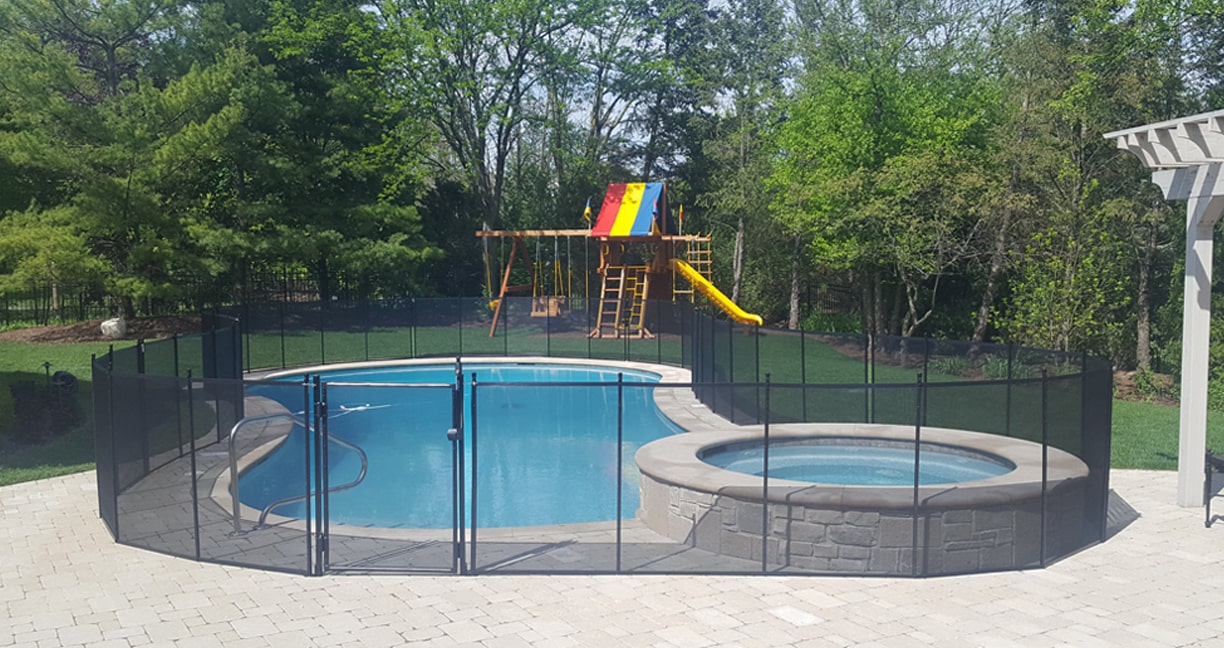
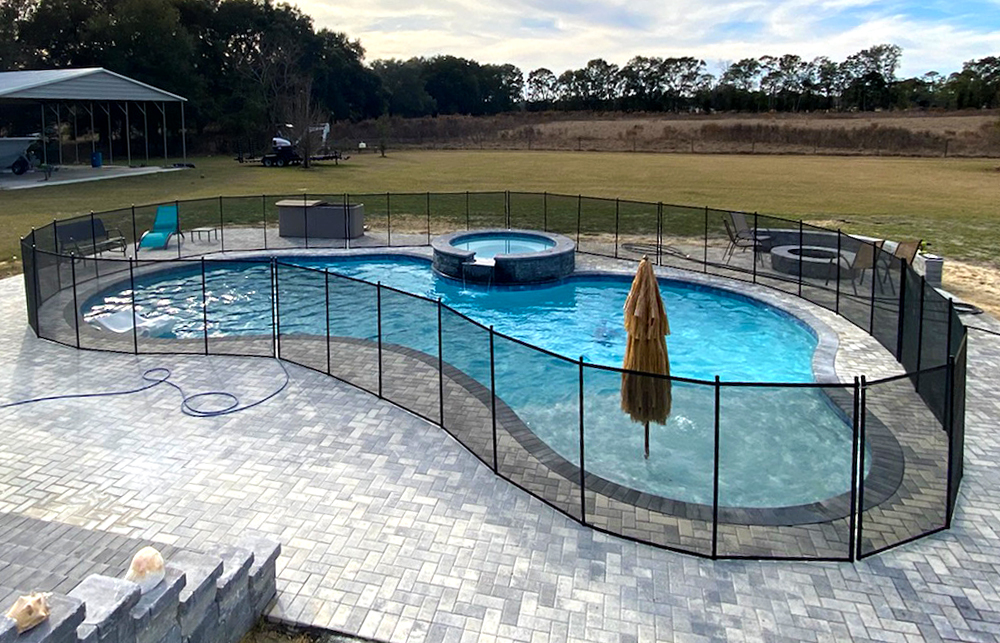
A permanent fence is one choice. Another is a removable mesh pool fence, which many families like because it keeps the view open and can be taken down by an adult when needed. Protect-A-Child fences are tensioned woven mesh held by slender I-Beam posts, designed as a clear, strong barrier that does not block your sight line to the water. Read more on our pool fence page, or see how removable pool fences stack up on safety.
Whatever you choose, look closely at the gate. Self-closing, self-latching gates are one of the most important parts of any barrier, since they are the part your family will use every day. You can learn more about self-closing pool fence gates and the Cable-Lock Latch that connects fence sections. Even then, make a habit of checking that the gate is latched.
Professional installation matters as well, since a fence only helps when it is set up properly for your pool and yard. Before you hire anyone, it helps to know what to ask before getting a pool fence installed.
Set your family’s pool rules from day one
Equipment is only part of it. In the first week, agree on a few simple habits:
- One adult is always the designated watcher when kids are near the water, with no phone, no chores, and no distractions.
- Kids never go in the pool area without an adult, even strong swimmers.
- Toys and floats come out of the pool and off the deck when swim time is over, since they pull children toward the water.
- Anyone who visits, including grandparents, babysitters and neighbors, hears the rules too.
- Pool chemicals and equipment stay locked away.
Make a short move-in checklist
- Walk the perimeter and test every gate and latch.
- Confirm there is a barrier between the house and the pool, or add one.
- Check your local requirements and ask what applies to your property.
- Add layers: door alarms, a pool alarm, life jackets, and swim lessons for the kids.
- Set the supervision rules before the first swim.
If you are unsure about your own pool and yard, a local professional can look at it with you. Ready to see what a pool fence could look like at your new home? Request a free pool fence quote and a trained local Protect-A-Child dealer will help you think through the options for your pool and property.