Short answer: Before installing a pool fence, ask about its safety features, strength, gate and latching systems, installation, removability and overall cost.
A pool safety fence is an important investment, especially when young children live in or regularly visit your home. But if you’ve never purchased one before, you may not know what to expect when speaking with an installer.
Asking a few practical questions can help you compare your options, understand what you’re paying for and choose a fence that fits your family’s needs.
1. Where Should the Pool Fence Be Installed?
One of the first things to discuss is where the fence should go.
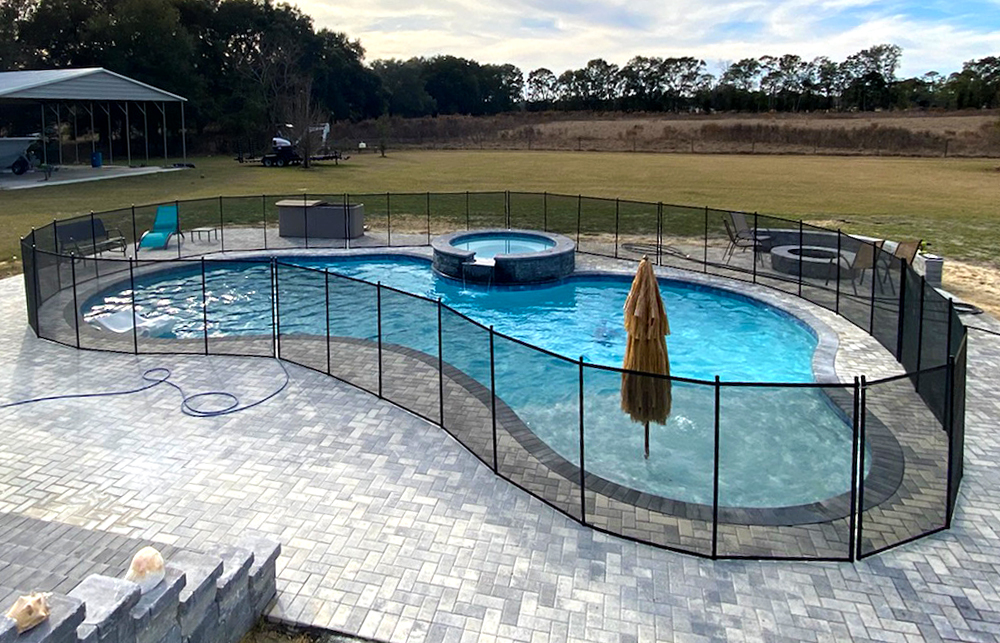
Every backyard is different. The shape of your pool, available deck space, doors, patios and outdoor living areas can all affect the layout.
A good starting point is to consider how the fence will separate the pool from areas children regularly use.
You should also think about how much space you want inside the fenced area and whether you can still comfortably use the rest of your backyard.
An experienced installer can help you explore different configurations and explain the advantages of each.
For a closer look at this decision, read our guide on where to place a pool safety fence around your pool.
2. What Type of Pool Fence Is Being Installed?
Not all pool fences are built the same way.
Even among removable mesh pool fences, there can be differences in the posts, mesh, attachment methods and overall construction.
Ask the installer to explain what makes the system strong, how the fence stays securely in place and what kind of maintenance it may require.
Pay attention to the complete fence system rather than focusing only on its appearance.
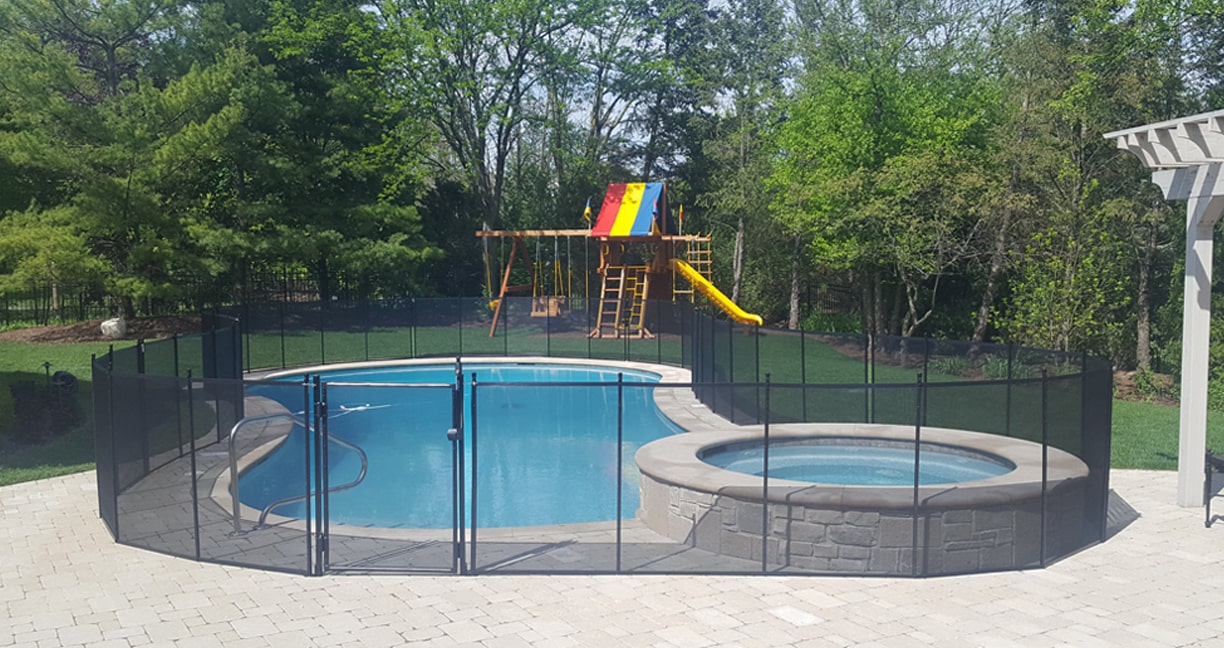
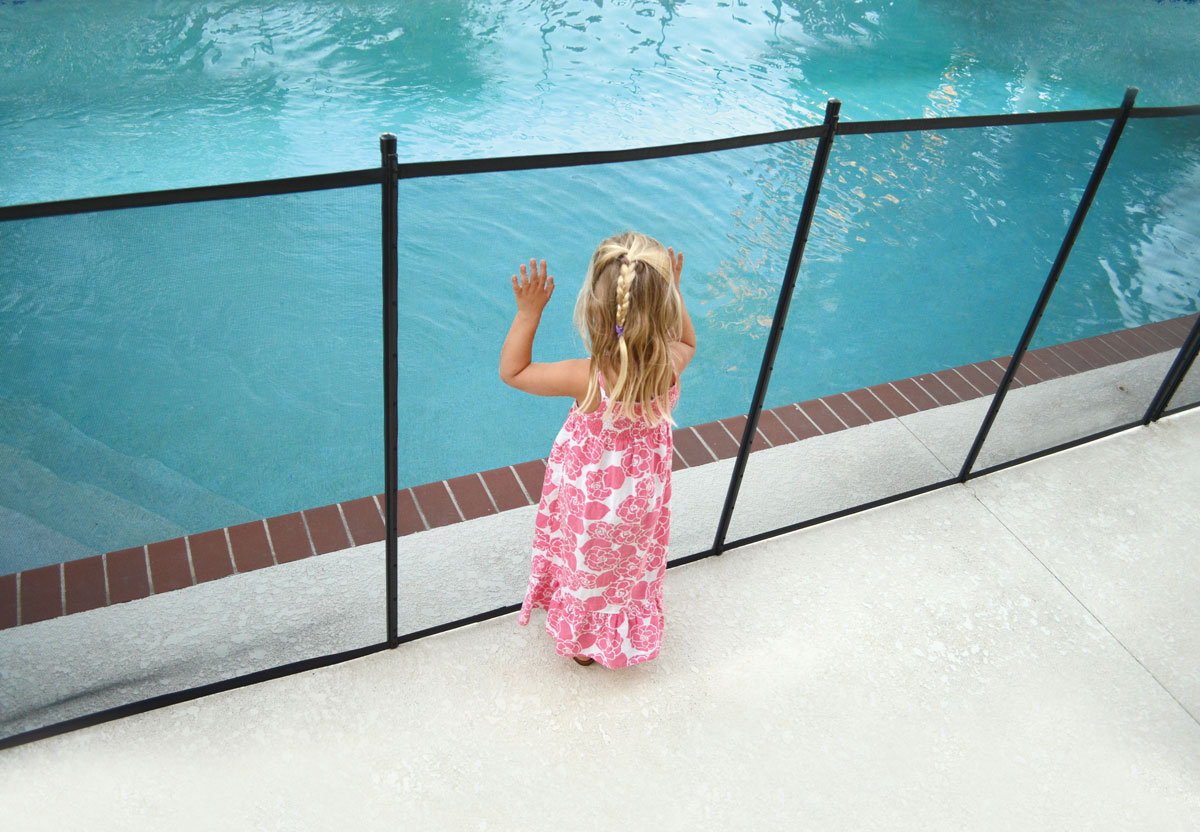
For example, Protect-A-Child’s removable mesh pool fence uses strong composite I-Beam posts, tensioned mesh and a modular panel design. Its narrower borders and concealed mesh attachments also create a cleaner, less obstructed view of the pool area.
You can explore these features on our Protect-A-Child pool fence page.
3. What Safety Features Does the Pool Fence Have?
A pool safety fence should do more than simply surround the water. Ask your installer how the fence is designed to help prevent unsupervised access to the pool, especially by young children.
Some important features to discuss include:
- Climb-resistant design: Look for a fence designed to discourage climbing, without convenient footholds or handholds that make it easier for children to get over.
- Strong, secure construction: Ask about the strength of the posts, mesh and connections, and how the complete fence system is designed to withstand everyday use.
- Secure latching: Find out how fence sections connect, how the latches work and whether young children can easily operate them.
- Self-closing, self-latching gates: A gate should be designed to close and latch automatically after someone passes through. Ask for a demonstration and always verify that the gate is securely latched.
- Secure deck anchoring: Understand how the posts are held in place and what prevents them from being easily removed or dislodged.
Protect-A-Child incorporates several of these features into its removable mesh pool fence system, including strong composite I-Beam posts, tensioned mesh, the Cable-Lock Latch and Lock-in-Deck technology. Optional self-closing gates provide convenient access while helping maintain the barrier.
Ask your installer to demonstrate these features and explain how they work together as a complete pool safety system.
Remember, no pool fence can eliminate drowning risk. A properly installed fence provides an important layer of protection, but active adult supervision is always essential.
3. How Will We Enter and Exit the Pool Area?
Think about how your family will access the pool on a normal day.
Will you want a self-closing gate? Where should it be located? How easy will it be for adults to use?
A properly designed pool safety gate should provide convenient access while helping maintain the barrier when the pool isn’t being used.
Protect-A-Child offers self-closing gates with key-lockable magnetic latches and spring-loaded hinges. These features help the gate close and latch, but adults should always verify that it has securely latched after each use.
It’s worth asking your installer to demonstrate how the gate works so you know what to expect before making your decision.
4. Can the Fence Be Removed When Needed?
One reason homeowners choose removable mesh pool fencing is flexibility.
You may occasionally want more open patio space for entertaining, landscaping or other backyard activities.
Ask which sections can be removed, how the process works and how the fence should be stored.
With Protect-A-Child, adults can release the Cable-Lock Latch and remove fence sections when appropriate. The system also includes Lock In Deck technology, which allows posts to mechanically lock into their deck sleeves.
However, removability should never compromise your family’s safety plan. When children may have access to the backyard, the fence should remain properly installed and secured.
5. What Does the Installation Involve?
A professional pool fence installation generally involves planning the layout, preparing the deck, installing the posts and mesh, and setting up any gates or access points.
But the details can vary depending on your property.
For example, installing fencing on a concrete deck may involve different considerations than working with pavers or other surfaces.
Ask your installer what work will be needed, whether any special preparation is required and approximately how long the installation should take.
You should also understand what the finished installation will look like, including where the posts will be positioned and how the deck openings will be finished.
6. What Is Included in the Quote?
Before comparing prices, make sure you understand what each estimate includes.
A lower initial price doesn’t necessarily mean you’re comparing the same products or installation services.
Useful details to clarify include:
- Total fence length and height
- Number and type of gates
- Fence materials and color
- Installation labor
- Any special work required for your deck
- Applicable warranty coverage
- Any additional charges or optional features
Ask for a clear explanation of the proposed installation so you can make an informed comparison.
It’s also worth asking what happens if a fence panel becomes damaged or needs replacement later.
7. Who Will Be Installing the Fence?
The quality of the installation matters just as much as the fence itself.
A removable mesh fence relies on properly positioned posts, secure anchoring, correct mesh tension and well-functioning access points.
Ask who will perform the installation, what experience they have with the product and whether they will show you how to operate the completed fence.
Protect-A-Child works with a nationwide network of trained local dealers who professionally install our pool fence systems.
Your installer can also discuss considerations specific to your backyard. Because pool barrier requirements vary by location, confirm applicable requirements with your local building authority before proceeding.
Make Sure the Fence Works for Your Family
Getting a pool fence installed involves more than choosing a product and scheduling an appointment.
You want a physical barrier that helps separate children from the pool, fits your backyard and is practical for your family to use every day.
Take the time to understand the layout, materials, access points, installation process and total cost before making your decision.
Remember that even a properly installed pool safety fence is only one layer of protection. Active adult supervision remains essential whenever children are around water.
If you’re considering removable mesh pool fencing, request a free quote from Protect-A-Child to connect with a trained local dealer who can discuss your options and help plan a fence for your backyard.